Painting the Beth Hamikdash: light, gold and memory
How do you depict a place no one has seen? In these paintings, the Temple of Jerusalem is not an architect's reconstruction, but a light resting above the city.
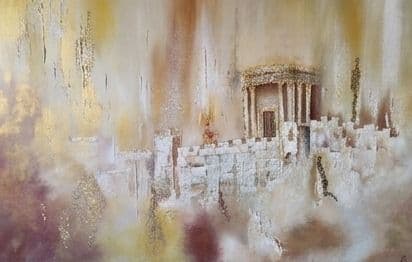
The Beth Hamikdash is a subject apart. You can paint the Kotel from life, but the Temple itself exists only in texts, models and collective memory. Every depiction is therefore an interpretation.
A vision rather than a plan
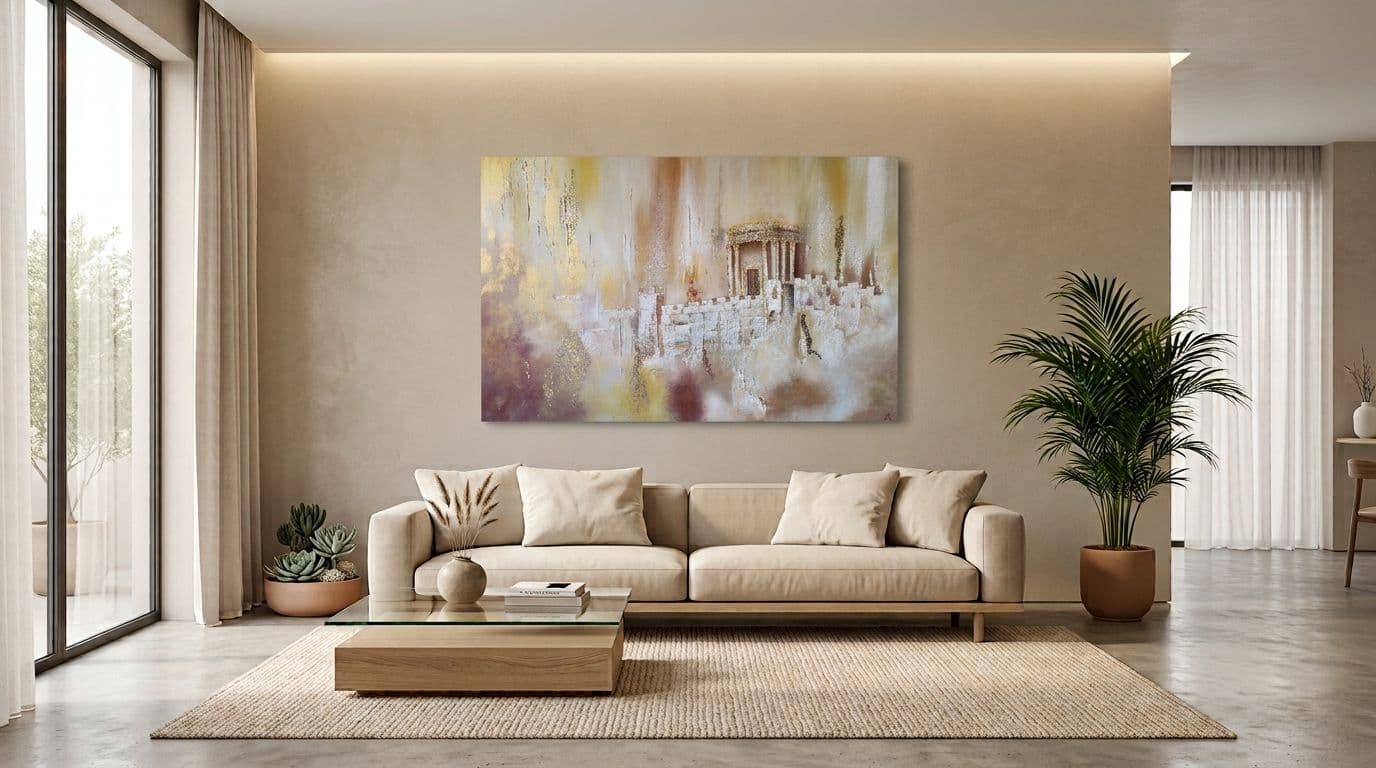
Rather than chasing architectural accuracy, these canvases treat the Temple as an apparition. In Golden Beth Hamikdash, it rises from a haze of gold, ochre and mauve drips above almost white walls. The eye understands the place without any detail being forced.
Why gold?
The gold leaf is not there for effect. It changes with the light in the room: warm in the evening, almost white at noon. The painting is never quite the same, which suits a subject about longing and presence.

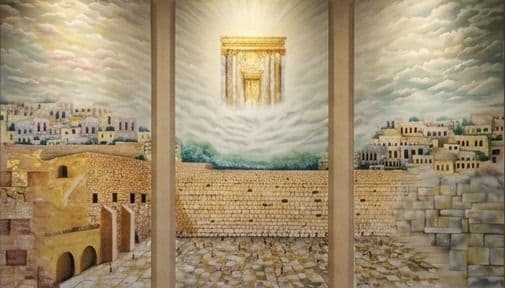
The triptych: the city below and the city above
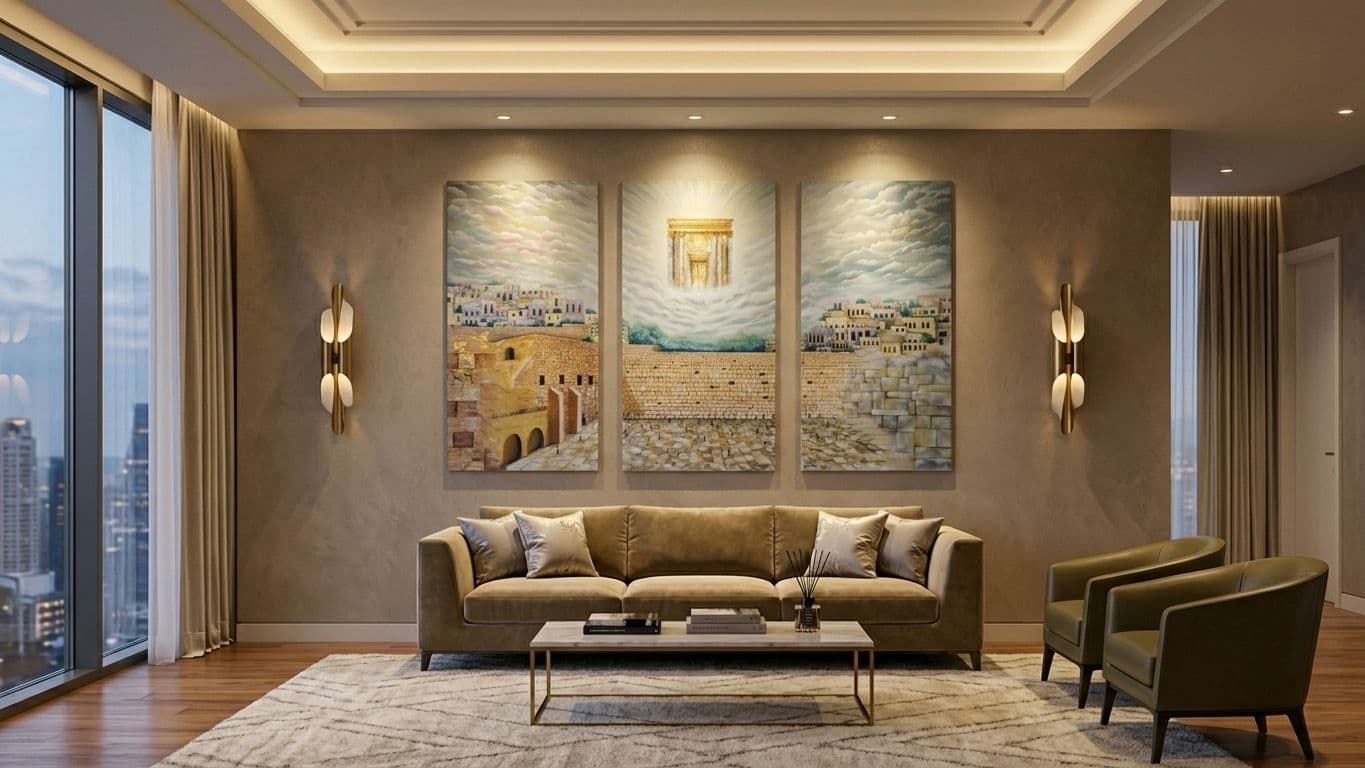
In the Jerusalem triptych, the three panels show the Old City and the Kotel, while the Temple appears above the central panel in a break in the clouds. It is the very old idea of an earthly Jerusalem facing a heavenly one.
Where to hang this kind of work?
These paintings naturally belong in a reception room, a study, or facing the Shabbat table. A clear wall and soft lighting from above bring out the texture and the gold.