Giving a Jewish painting: wedding, bar mitzvah, Chanukat HaBayit
A painting stays when other gifts are forgotten. A few pointers for choosing a meaningful work for the occasion, and avoiding the most common mistakes.
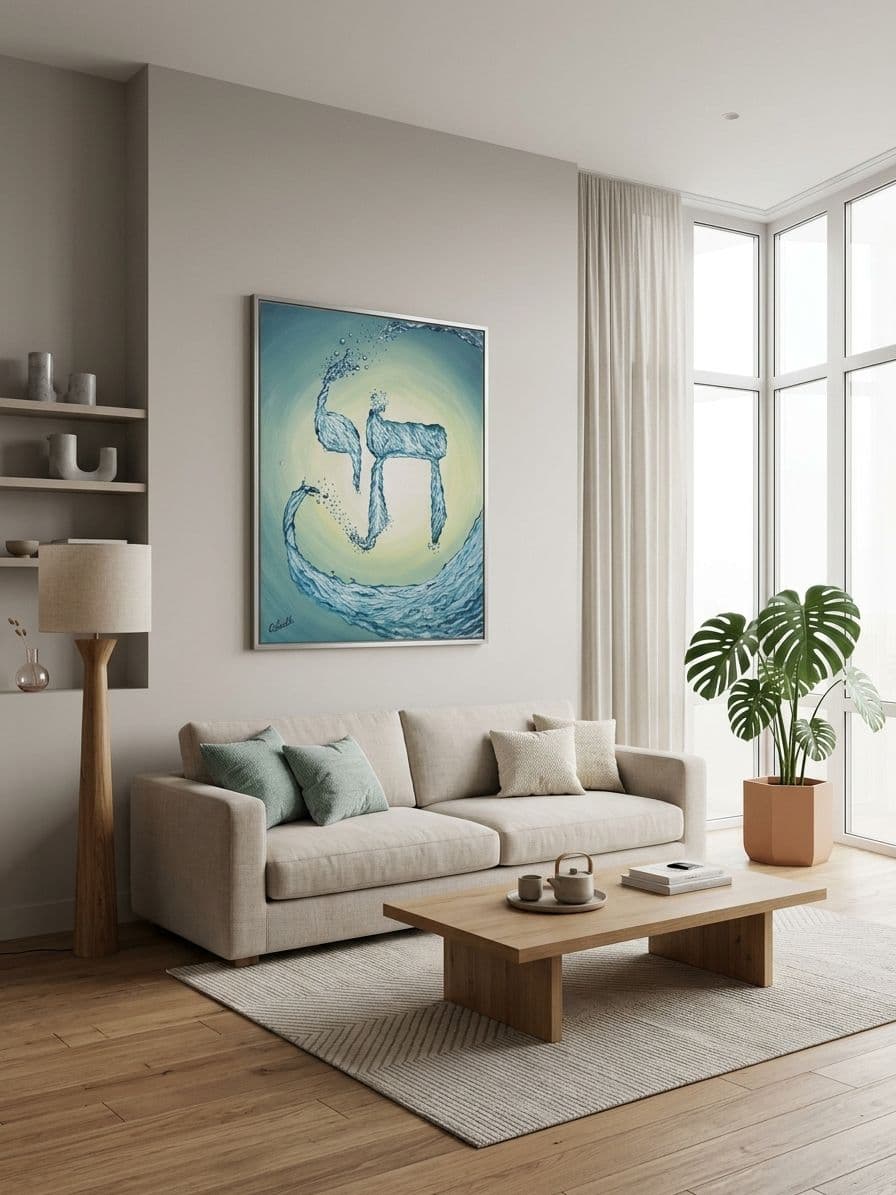
Giving an original work means giving something that will be looked at every day, sometimes for generations. It still has to find its place in the home of those who receive it.
For a wedding: a symbol rather than a portrait
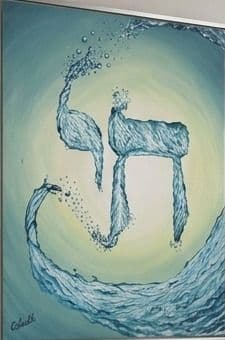
For a young couple, an open subject works better than an overly personal image. Chai, the word “alive”, written in water, is a good example: a simple blessing, with luminous colours that suit most interiors.
For a bar mitzvah: a subject that grows with him
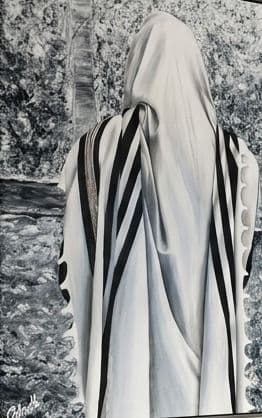
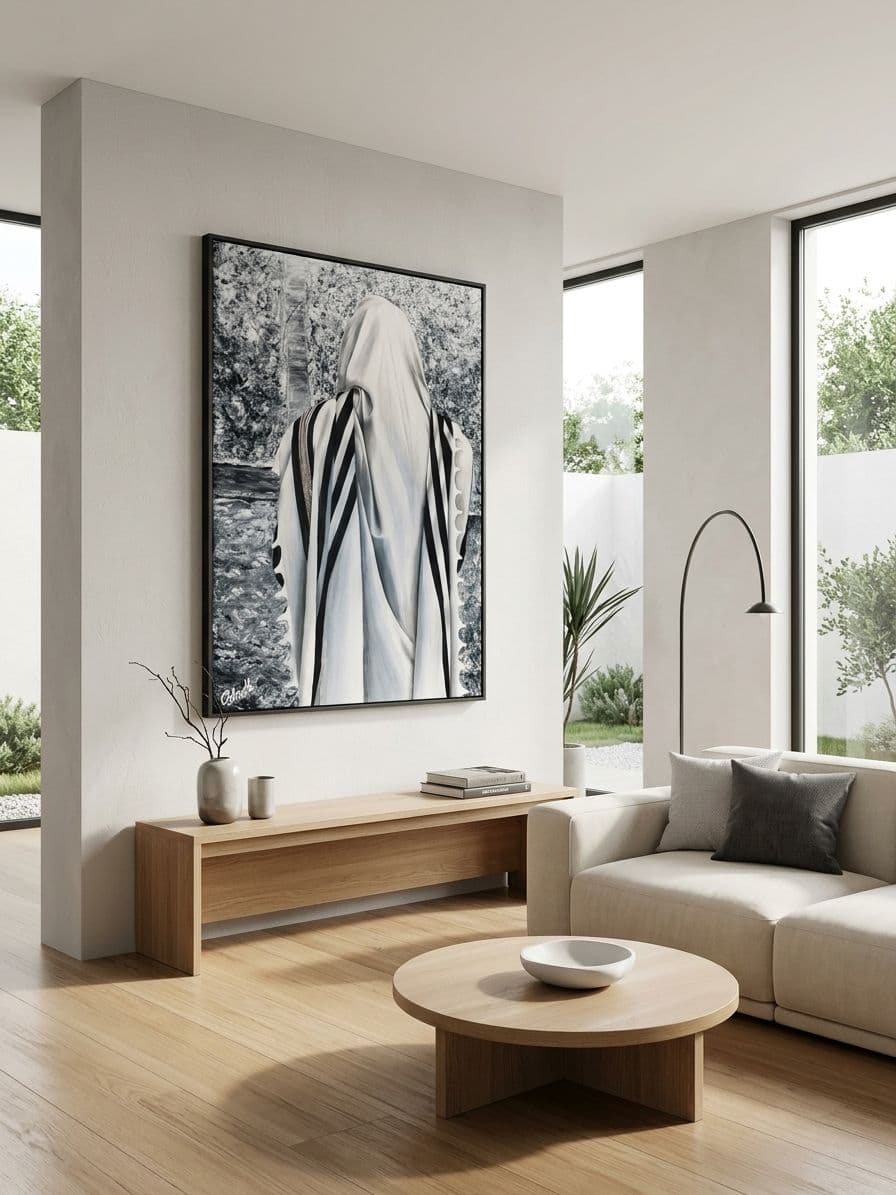
Prayer at the Kotel, a man seen from behind in his tallit, speaks to a boy putting on tefillin for the first time. It is a work he can keep in his room, then take to his own home.

For a Chanukat HaBayit: think about the wall
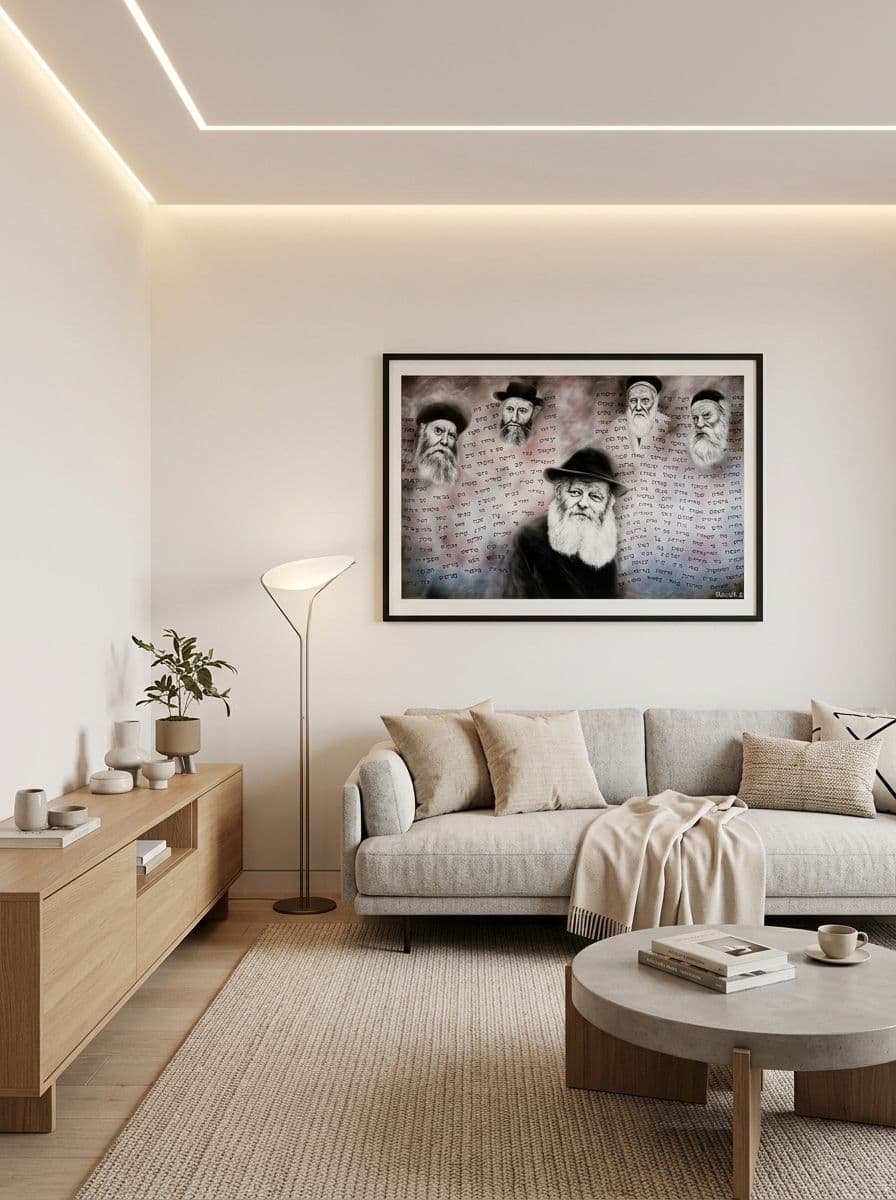
For a new home, discreetly ask about the style of the main room, or better still, for a photo of the wall. Neutral tones — black and white, beige, grey — are the safest. Portraits of Rabbanim, such as The Rebbeim, are especially moving for families attached to them.

Mistakes to avoid
Avoid very large formats without knowing the wall, and very bright colours in an interior you have never seen. And remember to include a note explaining the meaning of the work: that is often what makes it unforgettable.