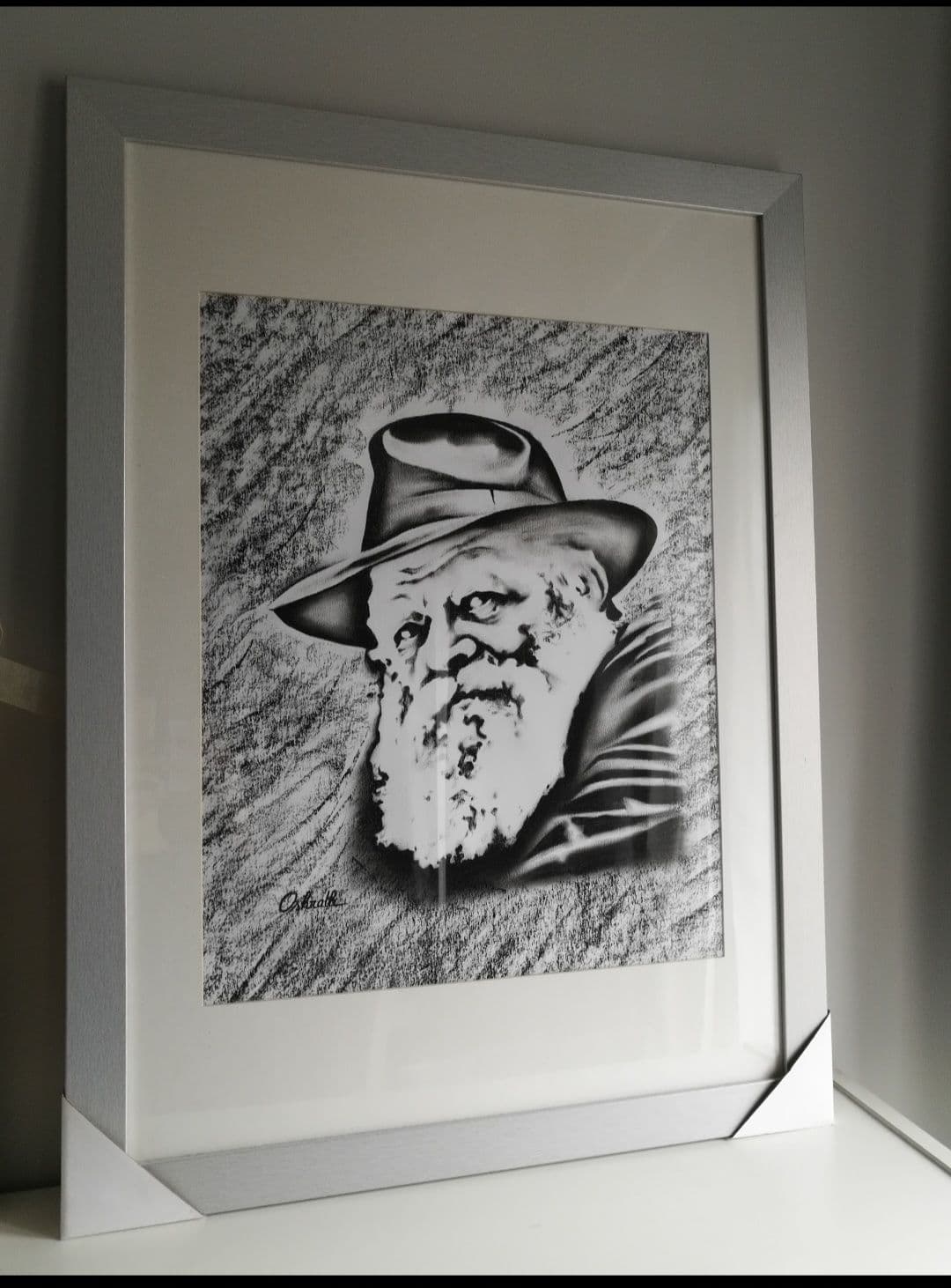
Framing a charcoal or pastel drawing: glass, mount and reflections
Charcoal and pastel are fragile media: a single rub can damage the drawing. How to frame them to protect them, and how to avoid the reflections that spoil everything.
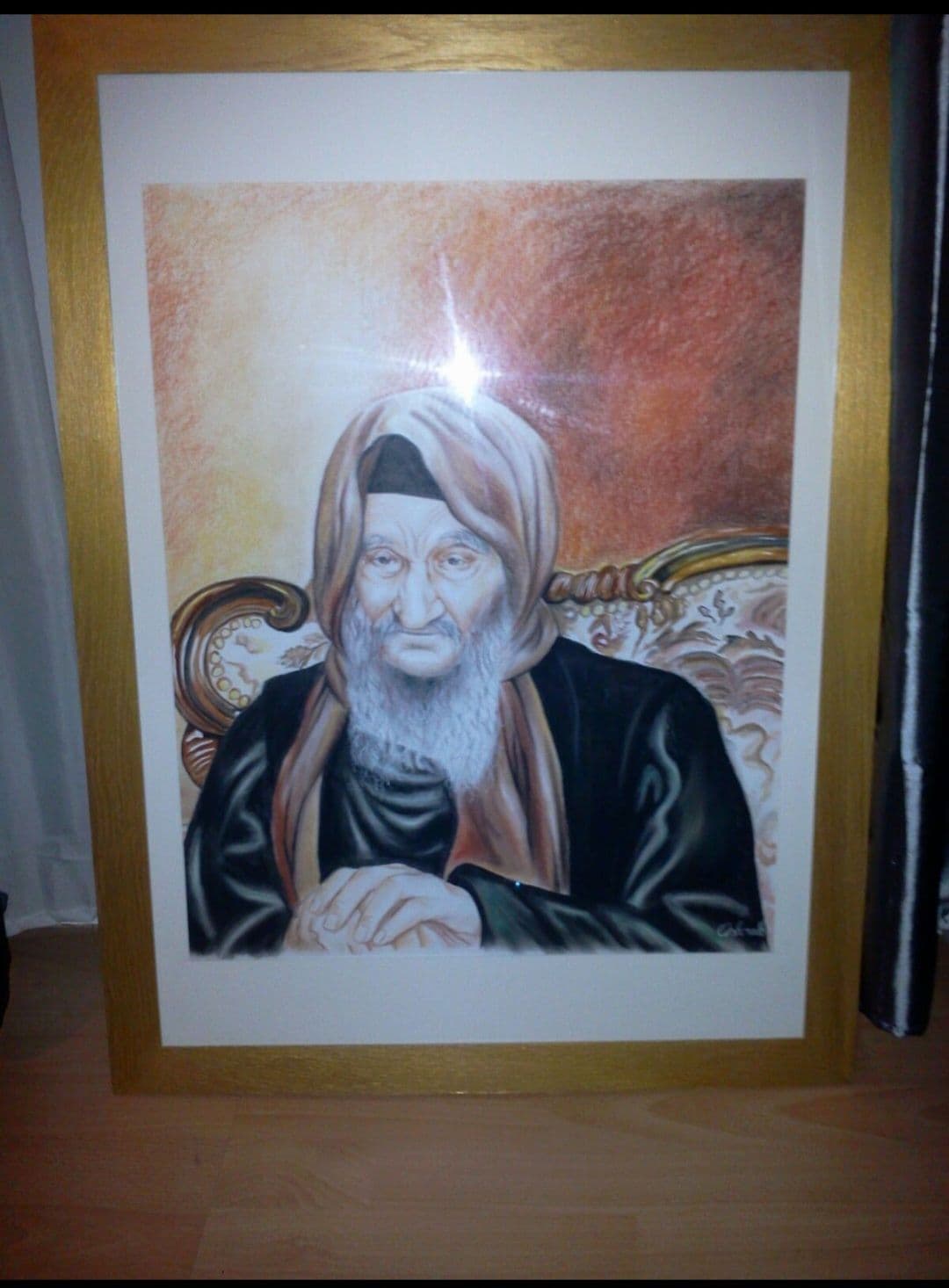
Unlike a painting on canvas, a charcoal or pastel drawing never truly dries: the pigment sits on the surface of the paper. Framing is therefore not a finishing touch, it is protection.
The mount is essential
The drawing must never touch the glass. A mount — the bevelled white board around the work — creates a few millimetres of air between the two. Without it, pigment gradually transfers onto the glass, and moisture can make the paper stick.

The problem of reflections
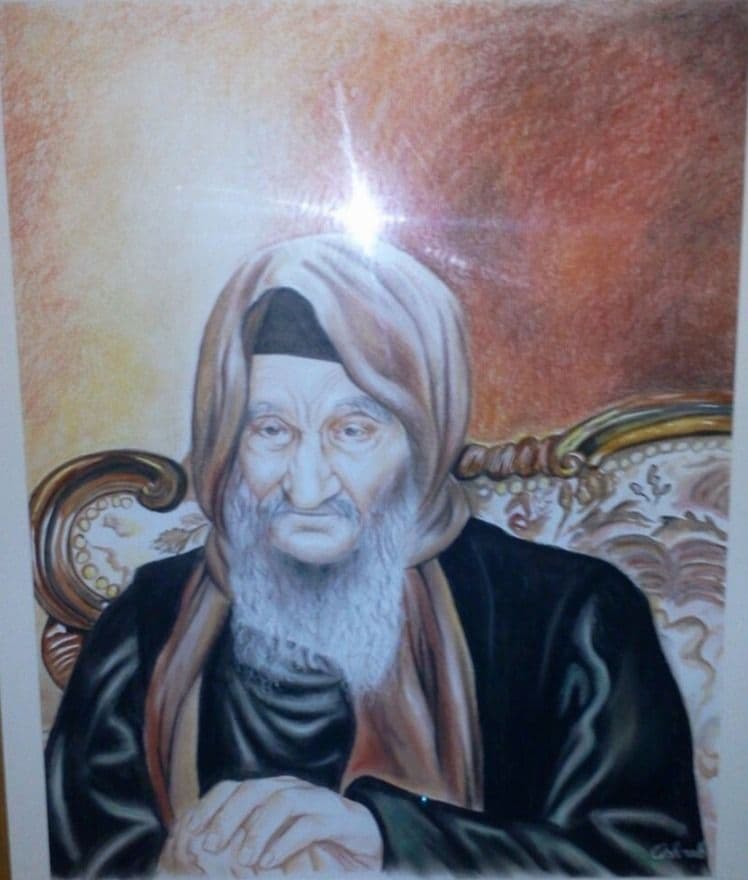
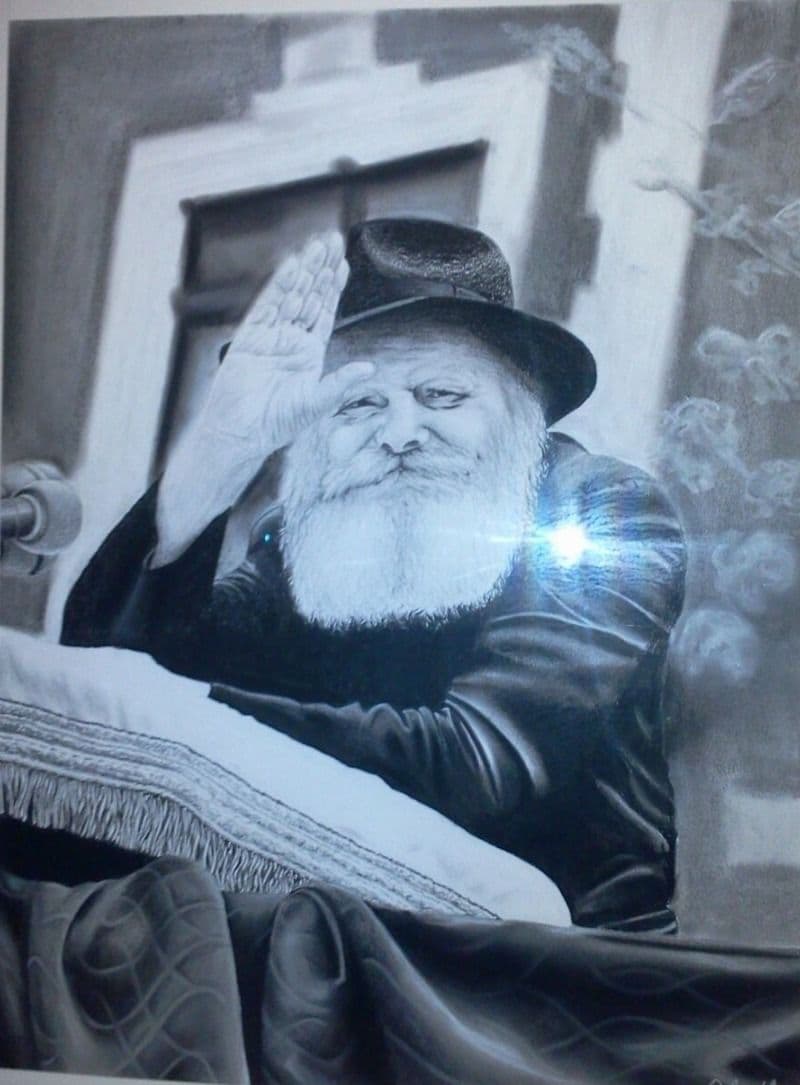
You can see it in our own photos: a flash of light on the glass can hide part of the face. There are two solutions. The simplest: hang the drawing facing a window rather than beside one, and avoid spotlights pointed straight at it. The most effective: anti-reflective glass, slightly more expensive, but it makes the drawing look almost unglazed.

Which frame to choose?
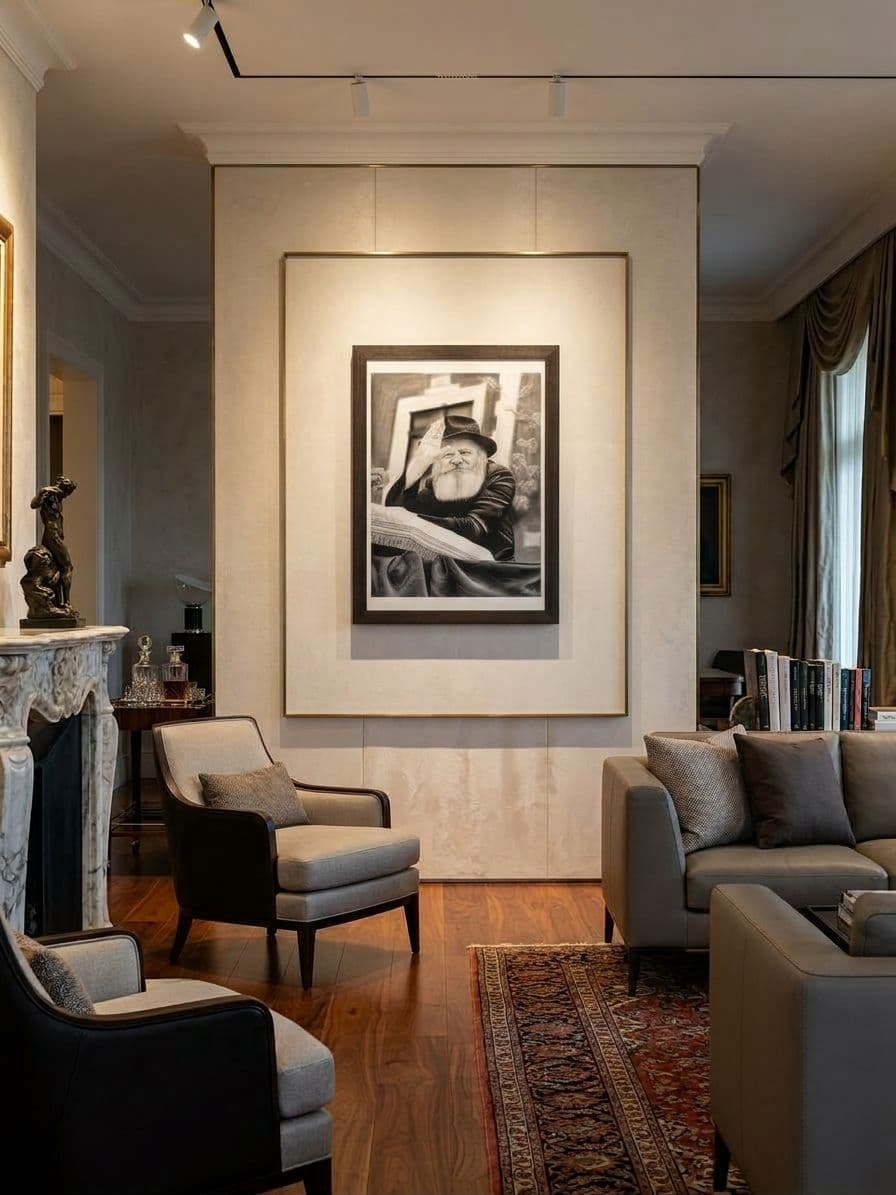
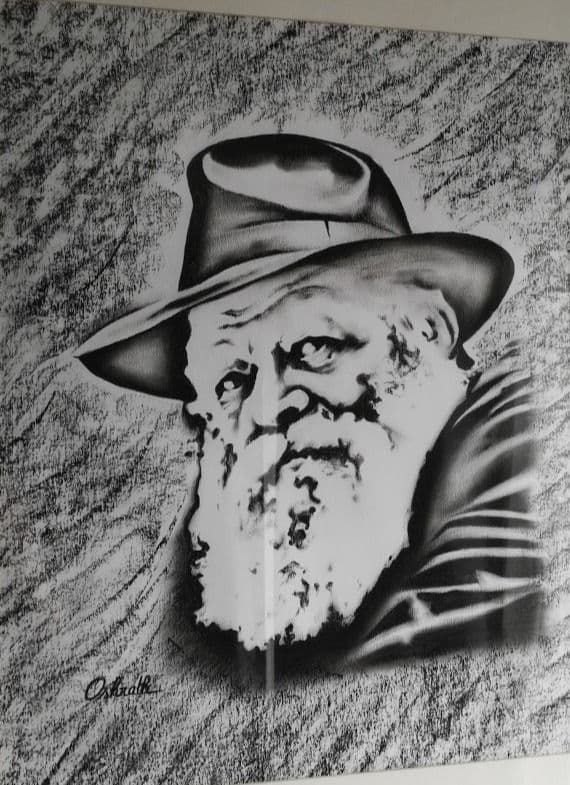
For a black and white drawing, a black, silver or dark wood frame extends the tones of the drawing. For a warm-toned pastel, like the portrait of the Baba Sali, a gilded or light wood frame echoes the ochres of the background.
Where to hang it?
Never in direct sunlight: ultraviolet light yellows paper and fades colours. Also avoid damp rooms such as kitchens and bathrooms. A hallway, a study or a living room sheltered from direct light is ideal.